The models were a big part of the speed. So was the environment I had already built around them.
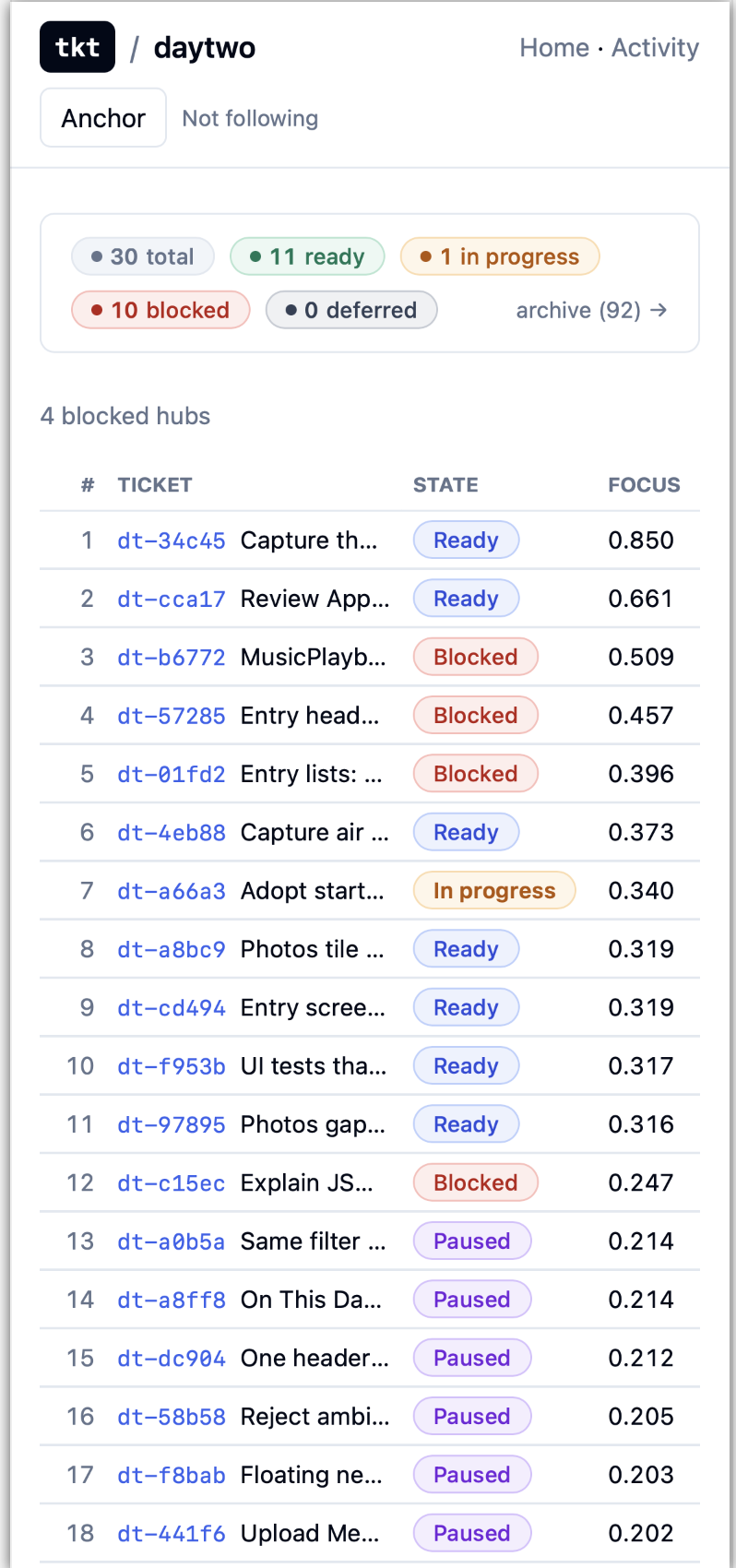
My harness configuration, shared instructions, planning skills and the tkt ticketing system we built made a substantial contribution. They gave sessions a clear starting point and kept decisions available across handoffs. I could tell what was ready, what was blocked and what had actually been verified.
The way we wrote plans mattered. Before implementation, we worked through the experience I wanted, which unit would own each responsibility, the dependencies and what would count as success. A shared design brief helped keep the interface consistent. The agents had less to guess about.
Tier 2 tickets made that direction actionable. Each ticket carried a goal, a design, acceptance criteria, testing obligations and the relevant files. An agent could start a bounded piece of work without reopening the entire product discussion. Another agent could use the same ticket to review the result.
The tkt CLI put that workflow within reach of the agents. They could read tickets, inspect dependencies, coordinate file ownership, start work and record evidence through structured commands. I could see the same work in the web interface. Ready, in progress, blocked and paused had distinct meanings, and the record survived beyond any one conversation.
That helped us keep moving without treating every finished coding session as a finished feature. We could review a committed candidate independently, run tests for the behavior that changed, and check the result on a phone. Work could stay paused when it needed a decision or a device check.
My part also involved using the app and being specific about what bothered me: whitespace, accidental taps, photo movement, a button’s position or the time it took to open the editor. The harness and ticket system helped turn those observations into changes I could try in the next build.
I cannot assign a percentage of the speed to each tool. But I do think this setup was a large contributor to what we got done in five days. We spent less time rebuilding context, had clearer boundaries for parallel work, and could hand work between agents with fewer loose ends.